
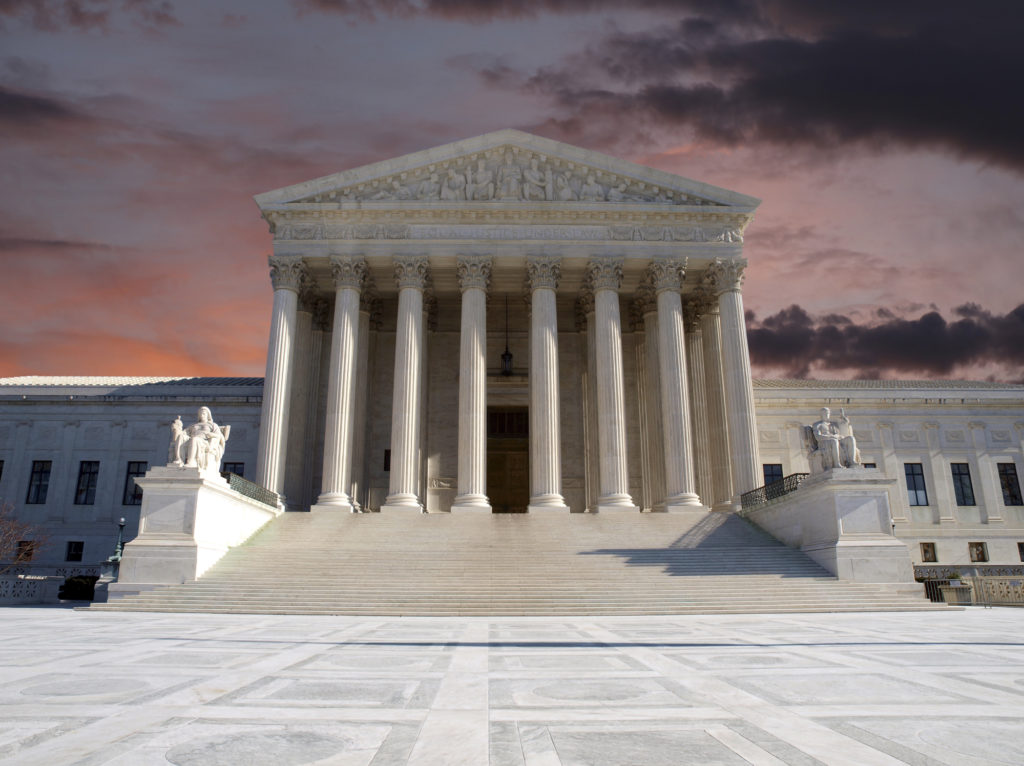
The United States Supreme Court recently heard oral argument in Trump v. Slaughter, a case centering on the March 2025 removal of Rebecca Kelly Slaughter as Commissioner of the Federal Trade Commission (“FTC”). As the court deliberates, a decision in favor of the government could limit or overturn Humphrey’s Executor v. United States (“Humphrey’s Executor”) and reshape the operation of independent federal agencies.
The Role of Humphrey’s Executor
Since the New Deal-era, Humphrey’s Executor has laid the foundation for the modern administrative state. William E. Humphrey, former Commissioner of the FTC, filed suit arguing that his removal by President Franklin D. Roosevelt was unlawful. He argued that his dismissal violated the FTC Act, which allows removal only on specific grounds—inefficiency, neglect of duty, or malfeasance in office. In a unanimous 1935 decision, the United States Supreme Court concluded that the President’s power to remove appointees to administrative agencies can be limited by Congress through for-cause removal protections. The Court emphasized that Congress intended to create nonpartisan, independent agencies insulated from day-to-day political control. Over time, this reasoning has become a doctrinal cornerstone for independent agencies whose members serve fixed terms and may be removed only for cause.
Even though Humphrey’s Executor has not been overruled, it has been significantly eroded in recent Supreme Court holdings. Since Chief Justice Roberts joined the Court in 2005, decisions such as Free Enterprise Fund v. Public Company Accounting Oversight Board (2010) and Selia Law v. Consumer Financial Protection Bureau (2020) have treated Humphrey’s Executor as an exception rather than the rule on the ability of the President to remove agency heads.
The Dispute in Trump v. Slaughter
Under a straightforward application of Humphrey’s Executor, the outcome for Commissioner Slaughter would appear clear: the removal protections of the FTC Act would apply and she would prevail. However, developments during oral argument before the Court suggest that it may be prepared to overturn the framework of Humphrey’s Executor. Several justices questioned the ongoing validity of Humphrey’s Executor and whether it remains workable under the modern authority of the FTC.
Additionally, the Court has taken several atypical procedural steps, further indicating a potential shift in the status quo. In September 2025, the United States District Court for the District of Columbia issued an injunction ordering Commissioner Slaughter’s reinstatement. The Court however responded with a temporary stay of that order, pausing Commissioner Slaughter’s reinstatement while the case proceeds. The Court also allowed the case to bypass the federal court of appeals by granting a writ of certiorari before judgment.
Implications for Labor and Employment
Although Trump v. Slaughter involves the FTC, which is not typically involved in employment matters (although in 2023, it did attempt, unsuccessfully, to ban employee noncompetition agreements – see our posts here and here) its potential implications could impact the entire administrative state. Agencies directly involved in regulating the workplace, such as the Equal Employment Opportunity Commission (“EEOC”) and the National Labor Relations Board (“NLRB”) operate under frameworks rooted in Humphrey’s Executor, making them particularly susceptible to a shift in precedent.
A decision by the Court to expand presidential removal authority may result in frequent leadership changes at the agency level affecting industry regulation, public services, and compliance procedures. Alternatively, a ruling for Commissioner Slaughter would reaffirm the existing protections that have guided agencies for decades.
Looking Ahead
Although a decision is not expected until this summer, employers, employees, and practitioners should monitor Trump v. Slaughter closely to understand the potential impacts on agency independence.